Waivers, Steep Slopes, Planning Commissions and the Supremes

25 Jan

FORUM WATCH EDITORIAL

By. Neil Williamson, President

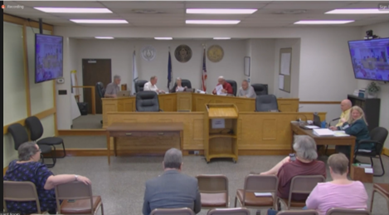
A Supreme Court of Virginia decision created most interesting political theater at last night’s Albemarle County Planning Commission meeting; where the Commission voted to deny two applications while in the same motion recommending their approval.

Please let me explain.

Earlier this month the Virginia Supreme Court handed down a ruling dismissing the ability of Planning Commissions to permit waivers.   The Albemarle County case revolved around a critical slopes waiver granted to the defendant to construct a cellular transmission tower.

In a memo to the Albemarle County Planning Commission, Deputy County Attorney Greg Kamptner explained the issues in the Kent Sinclair c. New Singular Wireless case:

Mr. Sinclair alleged and argued that the critical slopes waiver was a “variance” under State law and that the Planning Commission was not enabled to grant variances (under State law, variances may be approved only by boards of zoning appeal.) ….The County’s position was that critical slopes waivers are not variances and, therefore, they did not have to be approved by the Board of Zoning Appeals.

The ruling determined that Planning Commissions lacked the statutory power  to grant waivers.  As a Dillon Rule state, localities have only the statutory powers that are expressly granted by the General Assembly.

MIMSXWriting for the majority Justice William Mims stated:

We therefore hold that the Waiver Provision’s delegation of power to grant waiver applications to the planning commission is legislative in nature and is not authorized by state law. Accordingly, in enacting the Waiver Provision, the county exceeded its authority from the General Assembly in violation of the Dillon Rule and the Waiver Provision is void.

The decision also called into question the planning commission’s authority to approve Tier II wireless facilities.  Absent this authority, the Planning Commission was forced to deny the applications on the grounds that as a body they dd not have the statutory authority to approve them.  This action permits the applicant to appeal the decision to the Board of Supervisors (which does have the statutory authority to approve).  Interestingly, within the same motion, the Planning Commission endorsed each of the application on the merits of the application.

While the Free Enterprise Forum has no position on this specific case, we do believe it raises significant issues regarding policy implications.  This case called the question what is the proper role of a planning commission?

What should the Planning Commissions across the state be doing?

The original intent of Planning Commissions were to advise the Board of Supervisors (or City Council) on issues regarding the orderly development of the community.  This is to include the development of the state mandated comprehensive plan and, in Albemarle’s case, subservient Master Plans.  The review of site plans, agricultural forestal districts etc. have been folded into this legislative intent by considering it the implementation of the comprehensive plan.

In our reading of the original intent, this meant creating an overarching vision for the community and allowing the market to speak to that vision.  The reality that has followed has Planning Commissions meeting too often and discussing too much detail and (in Albemarle) one suggestion to further delegating site plan review to the Architectural Review Board (More on this next week).

In high growth localities, Planning Commissions are very busy.  Fairfax County’s Commission meets two nights a week and planning commissioners are paid $15,000 annually for their service [for means of comparison Albemarle meets, on average, three times a month and is paid $4,100 annually].

Are Planning Commissions doing work that could be handled moreAlbemarle Planning Commission Charlottesville Tomorrow.org efficiently by staff as an administrative decision?

Are those instances where significant issues arise better served by a hearing in front of the elected Board of Supervisors?

In the case of critical slopes, the Free Enterprise Forum believes these slope contribute to the ecological balance in their location.  This contribution is quantifiable.  If the slope, after disturbance, increases the positive ecological contribution, the disturbance should be approved.  Performance standards for such slopes can be established.  If one accepts this basic construct, such approvals can be administrative as they will be based on objective metrics.  If such waivers improve the environmental condition, we believe these should be routinely granted by staff.

It is our opinion that Planning Commissions (and Boards of Architectural Review) have experienced significant mission creep and continue to stray away from their original legislative intent.  Some, but not all, of this straying has been at the specific  direction of the General Assembly, and encouraged by the Virginia Association of Counties (VACO) lobbying group.  This is true in all localities but perhaps is best manifest in Albemarle County.

Late in last night’s meeting a Resolution of Intent was approved to change the zoning code and have the Board of Supervisors consider and act on all waivers as “special exceptions”, a type of approval expressly enabled by State zoning law.

This staff described “short term” solution will be considered at the previously scheduled joint public meeting of the Board and Planning Commission on February 8th.  Longer term solutions would require new State enabling legislation.

While the Free Enterprise Forum is appreciative of the tough spot this judicial ruling places applicants that are in the midst of the approval process, we believe the larger question should be engaged; should more decisions be administratively approved? 

We fear that rather than seeing the Sinclair decision as an opportunity to improve the development process by creating clear and objective standards that are acceptable to the community, localities will seek to further expand their statutory authority through legislative intiatives in Richmond.

Stay tuned.

Respectfully Submitted,

Neil Williamson

—————————————————————

20070731williamson Neil Williamson is the President of The Free Enterprise Forum, a privately funded public policy organization covering the City of Charlottesville as well as Albemarle, Greene, Fluvanna, Louisa and  Nelson County.  For more information visit the website www.freeenterpriseforum.org

Photo Credits: Valawyersweekly.com, Charlottesville Tomorrow

Tags: , , , , , ,

Louisa Unhappy Over Stormwater and Watershed Regulations

24 Jan

By. John Haksch, Field Officer

The Louisa County Board of Supervisors expressed their displeasure at the “strong-arm tactics” employed by the Federal government, State and regional officials pushing for a decision on the county’s participation or lack thereof in both the regional Storm Water Regulations and the Chesapeake Bay Watershed Implementation Plan.

The Board understands that they have few options regarding the county’s participation, but strongly objected to the wording of the documents on which they were asked to vote. Both documents implicitly (in the case of the Storm Water issue) and explicitly (in the Chesapeake Bay Plan) attempt to put words in the Board’s mouth that seem to applaud the State and Federal actions and all the present and any future regulations. This could not be further from the truth, as the Board is seeking to find any means available to prevent both these measures from being imposed on the county’s residents. The Board unanimously voted against the approval of both documents.

——————–

John Haksch is the Louisa County Field Officer for the Free Enterprise Forum a privately funded public policy organization.

The Free Enterprise Forum Field Officer program is funded by a generous grant from the Charlottesville Area Association of REALTORS® (CAAR) and by readers like you.  To support our work please donate online at www.freeenterpriseforum.org

Tags: , , ,

Rifle Hunting is a Hot Potato for Louisa Supervisors

24 Jan

By. John Haksch, Field Officer

The Louisa County Board of Supervisors tossed the question of allowing limited rifle hunting in the county to the Planning Commission, who lobbed it right back, after voting to decline to take a position on the issue.

At issue is a proposition to allow hunting with high caliber rifles from tree stands or other elevations of 10 feet or more (such as a haystack) during deer season. There has been lively debate – some less than courteous – since the proposal resurfaced after several years in hiding. Prior to the board meeting it was reported that calls and letters received by board members were running 3 to 1 in favor of the ordnance change.

Those who were part of the large turnout at Tuesday’s board meeting, however, were more than 4 to 1 opposed. The Supervisors then decided to table any action until such time as the County Attorney can come up with a palatable wording for a possible county-wide referendum in November.

——————–

John Haksch is the Louisa County Field Officer for the Free Enterprise Forum a privately funded public policy organization.

The Free Enterprise Forum Field Officer program is funded by a generous grant from the Charlottesville Area Association of REALTORS® (CAAR) and by readers like you.  To support our work please donate online at www.freeenterpriseforum.org

Tags: , ,

Fluvanna Board Okays Expanded Cell Tower

24 Jan

By William J. Des Rochers, Fluvanna Field Officer

Fluvanna County’s Board of Supervisors raced through an extremely cell phone one barlight agenda on January 18th, granting a height increase (via special use permit) for a cell tower that has yet to built, and another special use permit for an electricity substation. There were no other public hearings. Much of the rest of the meeting was taken up by briefings on ongoing projects.

Supervisors were informed that the conversion to narrow banding for county communications is proceeding apace and that the county should meet the end-of-year federal deadline. Interim county administrator Darren Coffey outlined a timeline for hiring a new county administrator, and although some supervisors seemed to want a faster timetable, Mr. Coffey appeared to convince the Board that a more deliberative process would provide more qualified candidates. Coffey hopes to have the new administrator in place by April.

Staff also provided the Board with copies of several other jurisdictions’ codes of ethics should Fluvanna chooses to adopt such a code.

At its next meeting on February 1st, , supervisors will get their first look at the staff’s budget proposal for FY 2013, which begins on July 1st. At current tax rates, supervisors will face a $2-$3 million budget shortfall. Just to keep services at current levels, supervisors would have to raise real estate taxes between 10 and 15 percent.

———————————————–

William Des Rochers is the Fluvanna County Field Officer for the Free Enterprise Forum a privately funded public policy organization.

The Free Enterprise Forum Field Officer program is funded by a generous grant from the Charlottesville Area Association of REALTORS® (CAAR) and by readers like you.  To support this important work please donate online at www.freeenterpriseforum.org

Tags: , , , ,

Greene Planning Commission Revisits $175 Million+ CIP

20 Jan

By Pauline Hovey, Field Officer

At their first meeting of 2012, Greene County planning commissioners poured over the proposed 2012 Capital Improvement Plan (CIP) before sending it to the Board of Supervisors for review.   The proposal projects $175,093,725 in departmental capital spending through FY 2019.

According to Greene County’s previous CIP:

A capital project will be defined as a project (1) which requires a minimum expenditure by the County of $20,000, (2) which has a useful life span of ten years or more, and (3) which meets one or more of the following criteria:

    • • Provides for the acquisition or construction of any physical facility for the community,
      to include consultant or professional services related to acquisition or construction;
      • Provides for the acquisition of equipment for any physical facility when first constructed or acquired;
      • Provides for the ongoing acquisition of major capital equipment or systems, i.e., computer technology, radio systems;
      • Provides for the acquisition of land or an interest in land;
      • Provides for the acquisition of public utilities;
      • Fund expenditures, including additions to existing facilities, which increase the square footage or value of a facility; and/or
      • Fund expenditures for major maintenance or replacement projects on existing facilities.

Newly elected Planning Commission Chairman Anthony Herring led the discussion of the various departments’ capital requests, which are continuing to escalate as the county population increases and the demand for county provided services expand. From the treasurer’s office, to the schools, to fire and rescue, the need for facility and equipment upgrades is anticipated, some more urgent than others.

The rescue squad has been in need of a new building for years, and in fact requested a new facility last year, at a cost estimated at $1.5 million. The current building—a converted old house—is well beyond capacity and in need of repair. In addition, the CIP includes requests for the replacement of outdated equipment for both fire and rescue departments.

Greene County 2012 Proposed Capital Improvement Plan(CIP)
Treasurer $ 13,500
Building Department $ 60,000
Information Technologies $ 178,000
Roads $ 33,121,814
Dyke Fire Department $ 515,000
Stanardsville Fire Department $ 1,270,000
Ruckersville Fire Department $ 6,900,000
Schools $ 39,195,000
Parks and Recreation $ 15,709,000
Rescue Squad $ 259,400
Social Services $ 1,025,000
Commonwealth Attorney $ 20,000
Administration Building $ 2,145,000
Utilities $ 60,670,000
Sheriff $ 4,070,000
Facilities $ 880,000
Community Development $ 195,000
Economic Development $ 8,390,000
Stormwater Retrofit $ 477,010
Total $175,093,724
Town of Stanardsville $ 6,078,000

Infrastructure projects, particularly the proposed water impoundment and water plant and the Stanardsville water and sewer project, at a combined estimated cost of $51 million, according to the CIP, may prove to be one of the most interesting discussions of the year.

The previous Greene County Board of Supervisors, led by Former Chairman Steve Catalano worked diligently to address the county’s future water needs.  As reported last summer:

Total estimated cost for the White Run Reservoir project is approximately $35 million. This includes construction costs associated with the dam and reservoir, the pump stations, water treatment plants, raw and finished water piping, estimated property acquisition costs, wetland and stream mitigation costs, and engineering and construction administration. Water would be pumped from the Rapidan River during wet weather and stored in the reservoir for usage during dry weather periods, causing minimal impact of the river. The target for pump storage is 900 mg.

Current Chairman Buggs Peyton (Stanardsville) and Jim Frydl (Ruckersville/Midway) fully supported the water supply plan last July. How the three new supervisors will view the plan remains to be seen. The joint permit application for the plan is already in process.

Other Planning Commission appointments included Commissioner Norm Slezak, who served as chairman for two years, will be the liaison for the Stanardsville Town Council; Commissioner Frank Steele will serve as liaison for the Economic Development Authority; and Bill Martin, who was reelected vice chairman, will be the lead liaison to the Site Committee, with Slezak serving as the secondary.

Supervisor Davis Lamb (Ruckersville district), former planning commissioner whose election to the Board of Supervisors left a seat on the commission vacant, was one of only a few residents in attendance at the meeting. Interviews of potential candidates to replace Lamb will be conducted the week of January 22, and a new commissioner may be in place by February.

———————————————–

Pauline Hovey is the Greene County Field Officer for the Free Enterprise Forum a privately funded public policy organization.

The Free Enterprise Forum Field Officer program is funded by a generous grant from the Charlottesville Area Association of REALTORS® (CAAR) and by readers like you.  To support this important work please donate online at www.freeenterpriseforum.org

Tags: , , ,

“How Do You Like Me Now?”–Albemarle’s Neighborhood Model turns 10

17 Jan

By. Neil Williamson, President

Ten years ago this April, the Albemarle County Board of Supervisors approved the ordinances that created the Neighborhood Model a new planning paradigm for their development areas. 

Places29 Bistro CornerThe Neighborhood Model draws its being from a New Urbanist planning philosophy known as Traditional Neighborhood Development (TND).  Albemarle’s Land Use Plan documents define TND as:  

(TND) is characterized by street grids, a mixture of
uses, sidewalks, and parks within a walkable
distance. Called traditional because they draw from
the design of towns before World War II, the TND
is compactly designed, with a center, an edge and
a general area that is predominantly residential.
Buildings are close to the street, the streets have
sidewalks, and housing designs include porches
and other traditional elements.

The Free Enterprise Forum opposed many of the highly prescriptive aspects of the neighborhood model preferring to allow the market to dictate housing types.  In addition, we raised significant concerns regarding the high level of development demands (curb, gutter, street trees, etc.) would increase the cost of new home construction and negatively impact affordable housing.

Now ten years later, what have we learned?

oldtrailTo be fair there have been some successful neighborhood model communities, Old Trail Village embraces many of the design constructs and has sold well.  The Shops at Stonefield, under consideration in 2001 as Albemarle Place, are now moving dirt and looking to open their first phase later this year.

Others have been even slower to take off and still other approved projects remain on the drawing boards waiting, ostensibly for market conditions to ripen to support their communities (and the costly proffers that are trigged by new construction).

The significant downturn in the real estate market has made the discussion of housing affordability less critical as all housing has become more affordable.  The just released Charlottesville Area Association of REALTORS® (CAAR ) 2011 Year end report cites:

Housing affordability is a positive aspect of this market. 596 homes, or 30% of the active listing market, were
for sale at $200,000 or less to begin 2012.

Have fewer single family homes been built in the Rural Areas?

Below is an analysis of New Single Family Home Construction based on Albemarle County’s Building Reports (note 2001 is only through the 3rd quarter) The data indicates that in the ten years after the adoption of the neighborhood model, the percentage of homes being built in the rural areas has not changed.

Single Family Home Construction   Development area Rural Area
  2001 47% 53%
  2002 50% 50%
  2003 51% 49%
  2004 47% 53%
  2005 48% 52%
  2006 36% 64%
  2007 35% 65%
  2008 37% 63%
  2009 52% 48%
  2010 57% 43%
  2011 42% 58%
TOTAL 2001-2011 46% 54%

Has Albemarle County Made Good on its Infrastructure pledge?

Interestingly the strongest rebuke of the Neighborhood Model is the issue of concurrent infrastructure.  Albemarle County envisioned making the development areas more attractive than the rural areas to live based upon amenities and efficient delivery of county services.  The long term funding issue for the Crozet Library is one example of Albemarle failing to live up to the demands of concurrency of infrastructure.

Back in August of 2003, Tom Loach, then a neighborhood representative took issue with moving forward with another master plan when the County had not fully funded the infrastructure for the Crozet plan.  He told the Development Steering Initiatives Committee (DISC II):

Mr. Loach would not agree to endorse the draft Resolution 2. He said the Board needs to “show us the money”. He said that until Crozet is shown that more money will be spent in Crozet, “how can another area expect to have payment for any infrastructure there either?” He wondered why any other neighborhood should even bother going through a master planning exercise.

The Free ENterprise Forum would tend to agree with Mr. Loach’s position.  When approving the Neighborhood Model in 2001 the additional costs of infrastructure were discussed at length.  Supervisor David Bowerman said there will come a time when future Board will need to fund the infrastructure to support this plan — They have not.

So the intended result did not occur; But what of the unintended consequences?

Unintended Consequence 1 – NIMBYism

In a recent roundtable regarding commercial development, now Planning Commissioner Tom Loach was very concerned about increasing the availability of industrial land near Crozet.  He mentioned that the Yancey Lumber Mill is in their area so “They already gave at the office” .  The empowerment of “Master Planning Groups” and the delegation of planning powers to these groups ensures more parochnimby1ial interests come to bear rather than thinking of the County as one community. 

The Board of Supervisors makes a point to indicate as a Board they represent the entire County.  It seems recent boards have endorsed the idea of attracting and retaining business as a Board Priority.  If this is the case, the Board must assert their authority over the advisory comments from the Master Planning groups.  It is unfortunate that this planning process has broken down into a battle of NIMBYism (Not In My Backyard) between neighborhood groups.

Unintended Consequence 2 – Loss of Light Industrial Land

It is fascinating to read the goals of the neighborhood model as approved in 2001 with the economic vitality lens of 2012:

  1. Pedestrian Orientation
  2. Neighborhood Friendly Streets and Paths
  3. Interconnected Streets and Transportation Networks
  4. Parks and Open Space
  5. Neighborhood Centers
  6. Buildings and Spaces of Human Scale
  7. Relegated Parking
  8. Mixture of Uses
  9. Mixture of Housing Types and Affordability
  10. Redevelopment
  11. Site Planning That Respects Terrain
  12. Clear Boundaries with the Rural Areas

Only #5 AND #8  touch on the need for economic activity within the Neighborhood Model communities.  The Free Enterprise Forum would suggest that the neighborhood model is, by design,  clearly light on jobs.

Perhaps because of this residential housing centric paradigm, we have seen a number of projects be rezoned from light industrial use to Neighborhood model.  To be fair, the property owners are well within their rights to request a rezoning of property to its highest and best use. 

What about needed infrastructure for business?

The reality  many light (and heavy) industrial uses can not find an affordable location within Albemarle’s currently designated development areas.  If Albemarle wishes to attract (and more importantly retain) their employers, they need to proactively determine where these activities should be centered. 

If we accept that there is limited funding for additional infrastructure and that most industrial users have a need for transportation access it seems logical to consider where such infrastructure already exists just outside the boundaries of the development areas.

One need only look at the location of two of the largest employers in Albemarle County, Martha Jefferson Hospital and State Farm Insurance, neither of these large users are house in the second story over a retail component, instead they have located near existing infrastructure (I-64).

To consider an industrial specific expansion of the development areas will not put the principles of the Neighborhood Model on their head but they will recognize the unintended consequences of new urbanism without a proper industrial component.

Alternatively, the jobs could relocate to localities who recognize the importance of an industrial base. 

The question to Albemarle with 10 years of economic data regarding the impact of the neighborhood model –where do we grow from here?

Respectfully Submitted,

Neil Williamson, President

—————————————————————

20070731williamson Neil Williamson is the President of The Free Enterprise Forum, a privately funded public policy organization covering the City of Charlottesville as well as Albemarle, Greene, Fluvanna, Louisa and  Nelson County.  For more information visit the website www.freeenterpriseforum.org

Photo Credits: Albemarle County, Old Trail Village

Tags: , , , , ,

Greene BOS Elects New Chair as Reductions in State Funding Looms

12 Jan

By Pauline Hovey, Greene County Field Officer

Changes abound for Greene County in this new year, not all of them welcomed as the county faces decreased state and federal funding that will greatly impact the school system’s budget (and in turn the County budget).

buggs peytonThe first change the Greene County Board of Supervisors experienced on Tuesday night (January 10) was the election of a new chairman, Buggs Peyton (Stanardsville) – a position his predecessor had served for eight years. Peyton (photo left) has the most experience on the board, followed by Supervisor Jim Frydl  (Midway), and both will need to rely on their knowledge of county procedures as they guide the three new board members through the fast-approaching budget process.

Facing reductions in both state and federal funding, this year’s budget will be challenging, especially for the school system. Greene’s Local Composite Index (LCI), which determines a locality’s ability to pay education costs, has risen significantly, and state contributions to the Virginia Retirement System (VRS) for teachers will decrease this year. According to Frydl, who is liaison to the school board, both factors combined along with a loss of federal money, means county schools will be dealing with as much as a $2.2 million reduction in funding.

One much-needed change underway concerns road improvements that will lessen traffic congestion in the Ruckersville district. In his quarterly repoVDOT logort to the board, Virginia Department of Transportation (VDOT)  representative David Crim reviewed the proposed improvements to the intersection of Route 607 (Matthew Mill Road) and Route 29, an intersection that has become increasingly traveled as housing developments have sprouted up in that area over the past several years.

According to VDOT, Rte. 607 currently carries 7,112 vehicles per day. Anyone traveling on that road during the morning or evening peak commuter hours knows firsthand how heavily congested it can be. VDOT is proposing to widen lanes on Rte. 607 to five lanes, allowing an additional turning lane into the Sheetz service station and an additional westbound left-turn lane onto Rte. 29 south. At a public hearing held at Ruckersville Elementary School on Wednesday (January 11th) evening, residents had an opportunity to view the intended changes, provide input, and ask questions of VDOT representatives. Project construction isn’t proposed to be completed, however, until the fall of 2015.

And with the new sheriff in office, widespread changes either have taken place or can be anticipated in that department as well. Sheriff Steve Smith came before the board Tuesday night to request permission to fill five vacant positions. When Smith, a newcomer to the county’s sheriff’s department, took office January 1, he did not reappoint several officers to their positions. Supervisor Frydl’s main concern about Smith’s request related to the current budget and whether filling these positions and the training the new officers would require would match the amount already appropriated. Frydl made a motion to approve filling the vacant positions contingent upon an investigation from the finance director to determine how many positions can be filled under current budget appropriations.

———————————————–

Pauline Hovey is the Greene County Field Officer for the Free Enterprise Forum a privately funded public policy organization.

The Free Enterprise Forum Field Officer program is funded by a generous grant from the Charlottesville Area Association of REALTORS® (CAAR) and by readers like you.  To support this important work please donate online at www.freeenterpriseforum.org

Tags: , , , ,

Fluvanna Supervisors Kick Off With a Retreat

9 Jan

By William J. Des Rochers, Fluvanna Field Officer

Fluvanna County’s Board of Supervisors kicked off its 2012 meeting schedule by holding its first meeting in two parts. The second session was an all-day retreat held in downtown Charlottesville on January 6th to discuss vision, goals, and budget. While short on many specifics, the retreat set a more collegial tone than had been seen in recent years.

Supervisors agreed to employ new procedures this budget cycle, given what they acknowledged to be “dire” budget circumstances. Perhaps under the rubric of no surprises, supervisors Joe Chesser (Rivanna) and Bob Ullenbruch (Palmyra) will work directly with the acting county administrator Darren Coffey and staff directors to hammer out what agreements they can at that committee level. Then the budget will go before the entire Board for further consideration and adoption.

Simultaneously, each county department will evaluate its program activities on a “most to least critical” scale to identify where the departmental priorities are.

There also will be an effort to look beyond the immediate budget cycle. Staff will prepare broad three-year projections and a five-year forecast that will focus on financial needs to:

· Maintain a steady (“do nothing”) budget;

· Comply only with state mandated requirements (e.g., the least the county is required to provide for schools is $8.2 million, according to Chairman Shawn Kenney (Columbia)); and,

· Develop a more sustainable budget, one that might, for example, be more aggressive in debt repayment (i.e., refinance or retire debt that comes due).

The Board’s budget subcommittee will meet later this month and the departmental budget proposal will be transmitted to the entire Board on February 1st. The school budget request, by far the largest component will be forwarded in March.

At the brief January 4th segment of the meeting, Mr. Kenney was elected Chairman of the Board, and Mr. Ullenbruch the vice-chairman. Supervisors also agreed to serve as Board representatives to several Boards and Commissions, most notably:

· Fluvanna Economic Development Commission: Mr. Chesser

· Thomas Jefferson Partnership Economic Development: Mr. Ullenbruch

· Thomas Jefferson Planning District Commission: Mr. Chesser

· Fluvanna Planning Commission: Mr. Chesser

· Virginia Association of Counties: Mr. Kenney

· Fluvanna Social Services Board: Ms. Booker (Fork Union)

The next Board meeting will be held on January 18th.

———————————————–

William Des Rochers is the Fluvanna County Field Officer for the Free Enterprise Forum a privately funded public policy organization.

The Free Enterprise Forum Field Officer program is funded by a generous grant from the Charlottesville Area Association of REALTORS® (CAAR) and by readers like you.  To support this important work please donate online at www.freeenterpriseforum.org

Tags: , , , ,

Louisa County Board of Supervisors Selects Chair and Co-Chair

5 Jan

By. John Haksch, Field Officer

The Bylaws of the The Louisa County Board of Supervisors require that a member may sit as chairman for no more than two clip_image002consecutive terms. Since former chairman Willie L. Gentry had served in that position for two years, it was incumbent upon the board to select another of their members to assume the duties of Chairman.

clip_image004Therefore, the board meeting was called to order by the County Administrator, Robert Dubé, who opened the floor to nominations. Dan Byers (Jackson District) and Willie L. Harper (Mineral District) were nominated, but Mr. Byers declined in favor of Mr. Harper.

clip_image006The supervisors unanimously elected Willie L. Harper as Chairman of the Board of Supervisors for the 2012 session. Richard Havasy (Green Springs District) was the sole nominee for the position of Vice Chairman, and hclip_image008e was elected by acclamation.

Mr. Troy Wade (Louisa District), a local businessman and the only freshman member of the board replaced long-time supervisor P. T. Spencer.

———————————————–

John Haksch is the Louisa County Field Officer for the Free Enterprise Forum a privately funded public policy organization.

The Free Enterprise Forum Field Officer program is funded by a generous grant from the Charlottesville Area Association of REALTORS® (CAAR) and by readers like you.  To support our work please donate online at www.freeenterpriseforum.org

Tags: , ,

2011 Forum Watch Top Ten

27 Dec

FORUM WATCH EDITORIAL

By Neil Williamson, President

‘Tis the season for Top Ten lists.  The Free Enterprise Forum reviewed all the issues we have followed and built our list based on the importance of the story and its future potential impact on the region.

Honorable mentions included:

Without question our favorite 2011 comment came from “Emory” regarding the first TJPDC story above:

toy story martians“In what way are the local politicians like space aliens?

I’ve never met a space alien, jealous of Mr. Williams in that regard.”

Without further ado here are our top 10 stories from 2011.

10.  Fluvanna County Administrator Jay Scudder resigns suddenly. Fluvanna has been through two administrators in as many years.

Field Officer William Des Rochers reports: “According to multiple sources, Scudder alienated the staff almost from the outset of his tenure and never managed to gain their confidence. SuperJay Scuddervisors became aware of the problem and also had their own difficulties with the administrator. Some believed as administrator, he was developing his own agenda and was not as supportive of the Board’s policies as he might have been.”  Click here for more

9.  Greene County Funds Schools Projects.  After over several years of discussion and public hearings Greene County approves infrastructure improvements at their schools complex (4-2). Athletic facilities and performing arts center to receive significant facelift.

Field Officer Pauline Hovey reports: “For the nearly 11 years thisgreene county track crack reporter has lived in Greene County and attended public hearings, this marks the first time 100 percent of public comments favored a proposal. No public hesitancy or negative comments were expressed at the hearing held at the Raymond C. Dingledine III Performing Arts Center at William Monroe High School. From business leaders to coaches, from parents to seniors with no children in the school system, every one of the 25 individuals who addressed the board fully supported the project, many of them expressing concern about the safety and condition of existing facilities”.(January)  Click here for more

8.  Louisa County gets the worst of the August 23rd earthquake and countless significant aftershocks.  After delays, FEMA grants emergency aid.

Field Officer John Haksch reports: On November 4th Virginia Governor Bob McDonnell announced that clip_image002President Obama, supported by the Federal Emergency Management Agency (FEMA), has reversed their previous decision to disqualify Louisa residents and businesses from receiving federal aid following the earthquake that rocked the county on August 23rd. The official request by the governor for assistance was made on September 20th, following thorough, weeks-long investigation by FEMA and both professional volunteers and county staff. Click here for more

7.  Albemarle County Places 29 Master Plan approved.  The Free Enterprise Forum registered its opposition to the plan but it fell on deaf ears

“It is important to note that while we have been an activePlaces29 Bistro Corner participant in the Places29 planning process, the Free Enterprise Forum has been a vocal critic of Places29 for many years.

While some of the concerns we highlighted have been removed, like the Supertax, others remain.  Click here to read more

6. Virginia Department of Transportation (VDOT) proposed “devolution” moving the responsibility secondary roads to localities.

VDOT logoFrom VDOT: Virginia is one of only a few states where state government has maintenance, operational, and construction responsibilities for local roads.

In most states, the state transportation agency assumes these responsibilities for interstate and primary routes while local governments assume them for local roads.

Except in Arlington and Henrico counties, the Virginia Department of Transportation (VDOT) assumes all maintenance, operational, and construction responsibilities on the secondary roads in the commonwealth’s counties.

In 2001, the General Assembly enacted what is commonly known as the “Devolution Statute.” The statute provides that boards of supervisors in any county that wishes to assume responsibility for any portion of the state secondary system of highways within that county’s boundaries may request the Commonwealth Transportation Commissioner enter into and implement an agreement to do so. This is known as “devolution.”

VDOT Devolution is a huge issue as we move into the 2012 General Assembly.

5. 1-Community Launch.  The Thomas Jefferson Planning District Commission starts its nearly $1 million dollar, three year 1-Community Comprehensive planning project AKA 36 month Planner Employment Plan.many plans logo

The Free Enterprise Forum blog has raised may concerns with this project:

“On the surface such a planning exercise seems benign, perhaps even appropriate but it’s much more than a simple planning exercise.  This may be the first step in changing the priorities in each localities comprehensive plan.

Without being overly dramatic, the Free Enterprise Forum is concerned the “Many Plans, One Community” has predetermined the result of their three year process as if they were programming the destination on their GPS.” To read more click here

4.  Cville Human Rights Commission Proposed City of Charlottesville opens up consideration of new bureaucracy with significant investigative and enforcement powers under the banner of “Human Rights”

The Free Enterprise Forum weighed in early with significant concerns with the legally duplicative  proposal:

“After reviewing all of the material  readily available on this issue, the Free Enterprise Forum fears that moving forward with the politically appointed Human Rights Commission, based on its current construct and goals, will do more harm than good for City economic opportunities across all demographic cohorts.

While we remain very concerned with human rights, we are equally concerned that unnecessary red tape will push more businesses out of not only Charlottesville but the entire region.

If the region loses economic opportunities  for the fear of over regulation, the region, and the residents of the region, lose.” to read more click here

3.  Meadowcreek Parkway (Albemarle Project) Opens. Albemarle pushes VDOT (and Charlottesville) to open their completed Meadowcreek Parkway Project.  While this will technically occur in 2012, it is a 2011 story.

The Free Enterprise Forum called out this issue in early summer under the headline “High Stakes Poker”

“Perhaps100_0362 the longest poker game on record (43 years), Charlottesville raised the ante by demanding a grade separated interchange be fully funded prior to any of the three independent projects moving forward (the largest in a litany of many conditions).  Despite the interchange funding secured through a Senator John Warner federal earmark,  City Council currently retains a narrow 3-2 split in favor of construction of the City project (McIntire Extended).  There has also been a federal lawsuit filed by a number of city residents.

When the three independent projects will open is still unclear.  At this point, Albemarle County seems to have an upper hand with a full constructed, albeit closed, road.  The lawsuit is a wild card that may or may not trump Albemarle”

In December Albemarle County requested VDOT open the road.  Charlottesville, in an act of true chutzpah placed a number of conditions for the opening of a road that starts in Albemarle County runs through Albemarle County and currently terminates in Albemarle County.  VDOT plans to address the conditions Charlottesville set forth and plans to open the Albemarle County project on January 6th click here for more

2.  Community Water Supply Plan Moves Slowly ForwardRivanna Water and Sewer Authority (RWSA) plan to move forward with 30’ height earthen dam is approved by DEQ.  The RWSA is positioned to award the dam bid as early as this Wednesday December 28th.  Back in March, the Free Enterprise Forum, who is a long time supporter of the Community Water Supply plan wrote:

“One of the more contentious, and expensive, poker games in recent memory.  This game required each side to fund preliminary engineering on two very different proposals for expansion of the Ragged Mountain Reservoir.  At the time, the Free Enterprise Forum opined regardless of who won someone was wasting money because their plan would not be used.  In the end, the jointly run Rivanna Water and Sewer Authority selected the County favored plan of an earthen dam but at a lower height than the county wanted.

Recognizing that the lower height was the only way the project would move forward at all, Albemarle agreed to Charlottesville’s demands.  In March 2009, Mayor Dave Norris famously said, “We hold all the cards” because the City holds title to the reservoir.”

When one considers the infrastructure Rivanna is planning to replace dates back to 1908 (and South Fork Rivanna Reservoir was built in 1966), one can recognize this issue may have has the greatest generational impact.

Charlottesville Tomorrow has a well written summary of the most recent DEQ action.  Click here to read more

1. Western Bypass US 29 Bypass revived, approved and goes out to bid.   Albemarle Board of Supervisors, Charlottesville-Albemarle Metropolitan Planning Organization (MPO) and Commonwealth Transportation Board (CTB) approve funding of the Western US 29 Bypass.  Nine vendors qualify to bid on the project.

Bypass Headline April 2011No story got more readership this year than our work on the US29 Bypass.  Starting with a small mention in an April 2011  VDOT Freight Report ending with a 3-2 vote on the MPO and a 12-1 vote on the CTB.

The Free Enterprise Forum has been a vocal advocate for the Bypass.  In a widely read editorial in the Daily Progress we opined the Western Bypass may reduce traffic to the levels that would allow the vision of Places 29 to become a reality:

Our stretch of US29 is the most dangerous portion of the entire US29 Corridor. The Virginia Department of Transportation (VDOT) has reported that 49% of all motor vehicle accidents – 41% of all personal injury accidents – within the Commonwealth of Virginia along US 29 occur in Charlottesville or Albemarle.  The current roadway is increasingly unsafe and the US29 Western Bypass will increase safety on our main street dramatically.Rt29logocorridor study

Current VDOT data estimates that an average of 57,000 motor vehicles cross US29 at Hydraulic Road every day. VDOT has further estimated between 10%-20% of those vehicles are “thru-traffic” with no intention of stopping in our community. Using the median range (15%) means that more than 8,000 vehicles, many heavy trucks, would be removed. In addition each day as many as 10,000 or more vehicles within our region would bypass ‘Business 29’….

Each year the Federal Government and Virginia collect more than $40 million in motor vehicle taxes in Charlottesville and Albemarle.  The last major public road project completed locally is the widening of US29 (mid 1990s).  It has been estimated that as a community we have paid $600 million in motor vehicle taxes in the sixteen years since VDOT constructed any new road project here. It’s time our community got some of its infrastructure investment back.

us 29 logoTwenty years from now, citizens will look back on this discussion and not talk about the meritorious Western Bypass but instead wonder, as with the Route 250 Bypass, “How would our community survive without the vitality of ‘Business 29’?”

All of these issues and the local elections, 2011 is headed to the history books but I know I have learned a great deal.

Thank you for reading the blog.  The field officers and I work hard to provide you with informed commentary on local issues that impact you.

In 2012, The Free Enterprise Forum is moving into our eighth year.  As for most enterprises, 2011 has been a challenge. If you find our work helpful, please consider financially supporting the Free Enterprise Forum.  Please click here for our secure server donation page!

Thank you for the opportunity to serve.  May you and your families have a Happy 2012.

Respectfully Submitted,

Neil Williamson

—————————————————————

20070731williamson Neil Williamson is the President of The Free Enterprise Forum, a privately funded public policy organization covering the City of Charlottesville as well as Albemarle, Greene, Fluvanna, Louisa and  Nelson County.  For more information visit the website www.freeenterpriseforum.org

Photo Credits: Pixar, Albemarle County, Fluvanna County, Office of Governor,  VDOT

Tags: , , , , , , , , , , ,

Follow

Get every new post delivered to your Inbox.